Dog Products
How do I measure my dog for a collar?
Mar
In this blog, I’ll explain how to get the correct measurement for a dog collar and why you might have bought the wrong size collar for your dog.
There’s actually more to this than people realise.
There are different ways retailers display collar sizes (i.e. usually laid flat) and advise buyers how to measure, but here’s the thing.
There’s a difference between the size when laid fat and in a circle. I’ll give you an example:
25 inches laid flat becomes 24 inches when in a circle.
16 inches become 15.5 inches.
12 inches becomes 11.5 inches.
This may not seem much, but when buying smaller collars, the adjustment available is a lot less and if your dog’s neck size is on the upper or lower end of the measurement, this is when you hit problems.
Measuring wrong
When snap collars are laid flat, the male side of the buckle has bits sticking out, if you include those too, that will add around an inch. This is wrong, you would not include the male parts of the buckle.
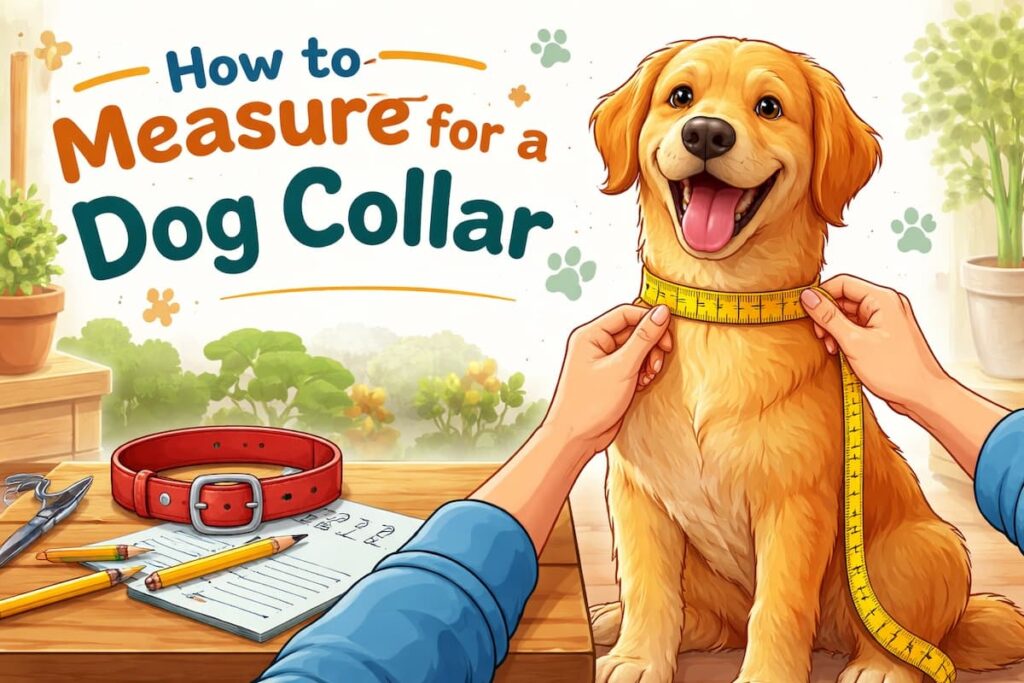
So how do you properly measure your dog for a collar?
Take a cloth tape, put it round your dogs’ neck where the collar would ordinarily sit. Bear in mind that some dogs’ necks are different sizes at the top and the bottom. If you take the measurement at the top of a neck like this the collar may end up being too small and vice versa.
When buying a collar and realising it’s the wrong size, you are usually allowed to try it on your dog, but under no circumstances must it be used as items must be in an unused condition to be eligible for a refund.
What about measuring for a half check collar?
This is where people really get confused and I wrote a whole blog on this one topic of measuring correctly for a half check collar.
It is simple when you know how. Just ignore the chain and simply measure your dog’s neck using that number in inches or centimetres to choose the right size collar.
Don’t add any on and don’t try and work out what it should be taking into consideration the chain.
To wrap this up, getting the right collar size isn’t just about picking a number off a chart — it’s about understanding how that number has been measured in the first place.
A collar laid flat will almost always measure slightly longer than when it’s actually worn in a circle. That small difference is exactly where sizing issues creep in, especially with smaller collars or dogs that sit near the edge of a size range.
Add in common mistakes like measuring over the buckle parts, or taking the measurement in the wrong place on the neck, and it’s easy to see why so many collars end up not quite right.
If you keep it simple — measure your dog’s neck where the collar naturally sits, use that exact measurement, and don’t overthink it — you’ll get a much better fit first time.
And when in doubt, always check how the retailer is measuring their collars. That one detail makes more difference than most people realise.